
Home // Other Industries
Induction supports industrial processes where traditional heating falls short. From mining tools to textile rollers and rubber moulds, precise surface heat strengthens control, reduces energy use and enables efficient, modern production.


In mining equipment production, shrink fitting relies on heating one precise region without disturbing the rest of the part. Induction excels at that. Our SM2C and optimised coils produce fast, localised heating that replaces slow batch furnace processing with clean in-line heating solutions. The process becomes more accurate and supports energy-efficient assembly processes that keep production moving.
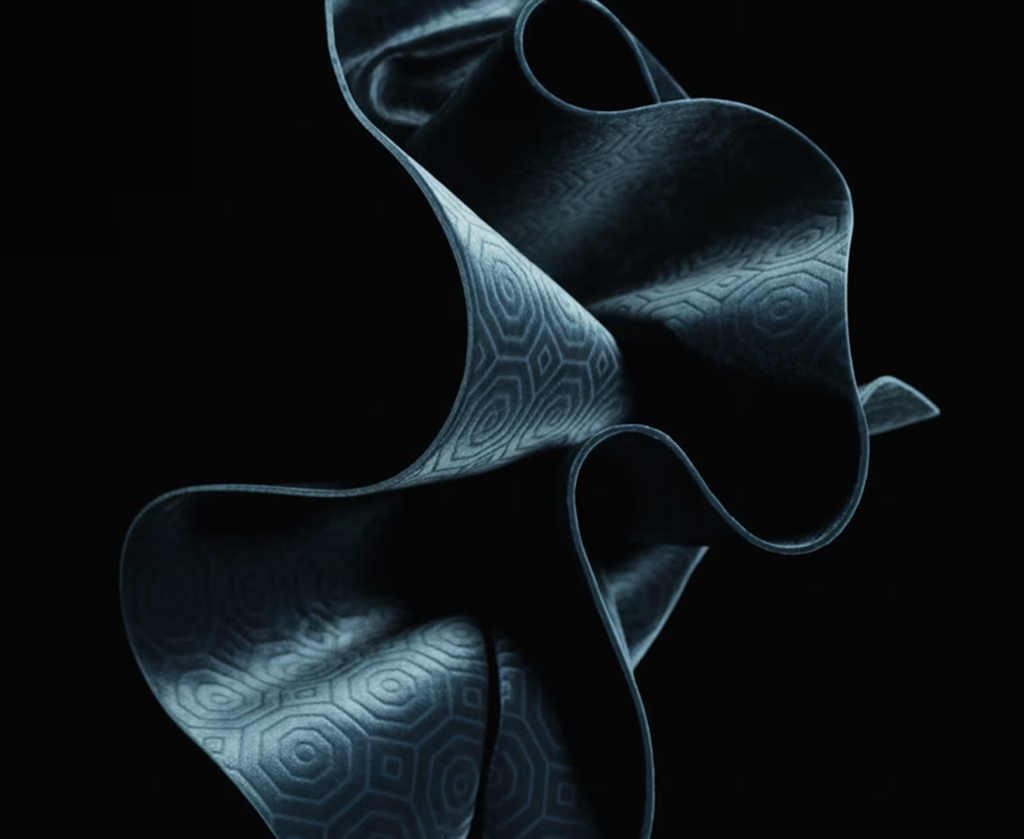
Textile lines move under constant tension and every surface shapes how fibres behave. Materials dry, shrink and reform as rollers and metal belts carry them through the process. Induction heating for the textile industry keeps these surfaces stable with even, surface-focused heat. It supports calendaring over heated rollers, clean fibre movement and efficient heating across fast fiber processing solutions and other forms of industrial heating for fabrics.
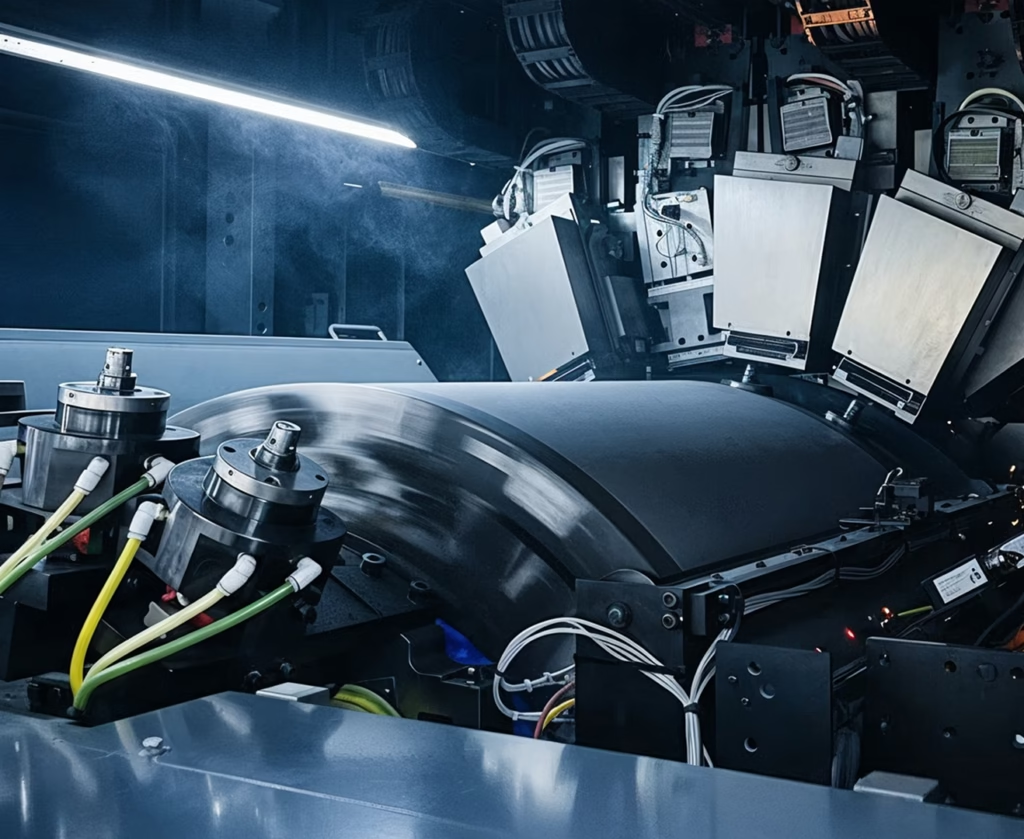
Print rollers drive ink transfer, laydown and surface stability. When their temperature shifts, the print profile shifts with it. MagComp’s induction provides controlled roller heating with clean, electric energy that follows the roller surface and replaces drifting thermal oil systems. Ink release stays consistent, colour density holds and each cycle runs with the predictability modern print operations require.
Thermal stability is central to industrial rubber processing. Tools, inserts and rollers must reach defined temperatures to shape and release material with confidence. Induction provides controlled heating for rollers and planar structures with an electric, surface-focused approach. Our innovative SM2C and optimised coils enhance roller heating solutions and deliver dependable induction heating for the rubber industry.
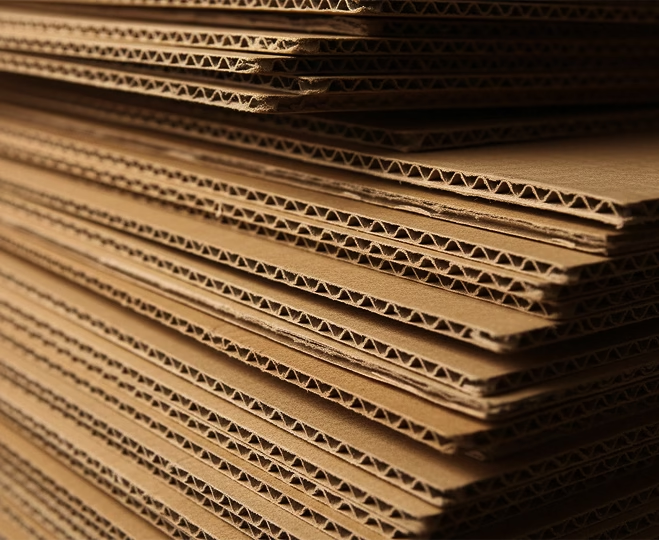
Paper and board lines need rollers that reach temperature quickly and stay stable through speed changes. Induction keeps moisture behaviour steady and reduces variation as the web moves between stations. Laminating, packaging and printing lines benefit from a roller that delivers the same surface contact at the start of the shift as at full speed, helping you keep adhesion and coating quality consistent. Textile, fibre and food-processing setups gain controlled heating that reacts with the process, supporting sensitive materials and reducing the stops caused by slow or drifting roller temperatures.
Our induction technology reflects precise engineering and efficient thermal control shaped by advanced materials. With a custom workflow built for industry, we create solutions that secure long-term competitiveness.
Shrink-fit operations depend on heating one region without disturbing the rest of the part. Induction builds precise, localised heat using our unique SM2C flux conductors and optimised coils. This replaces slow batch furnaces with clean, accurate inline heating that strengthens assembly efficiency.
Shrink-fit operations depend on heating one region without disturbing the rest of the part. Induction builds precise, localised heat using SM2C flux conductors and optimised coils. This replaces slow batch furnaces with clean, accurate inline heating that strengthens assembly efficiency.
Fibre lines rely on rollers and metal belts that stay at defined temperatures under constant tension. Induction maintains those profiles with even, controlled heat, supporting calendaring, fibre movement and stable drying behaviour across fast-moving production.
Yes. Induction follows the roller surface with controlled, electric heat. This removes slow response and temperature drift associated with thermal-oil systems. Ink transfer stays consistent, colour density holds and each print cycle gains predictable thermal conditions.
Rubber processing requires tools, inserts and rollers to reach specific temperatures with tight accuracy. Induction provides direct, even heat at the surface, supporting clean release, consistent shaping and stable thermal profiles across long runs in compact production equipment.
Yes. Every solution we build and deliver always start with understanding the customer’s unique process. We use your geometry, material mix, thermal pattern and production speed to shape the heater. Modular blocks and adaptable coil designs then match tools, rollers, belts or planar structures, ensuring reliable performance across different industrial environments.
"*" indicates required fields