
Home // Bar, Rod & Tube Heating System
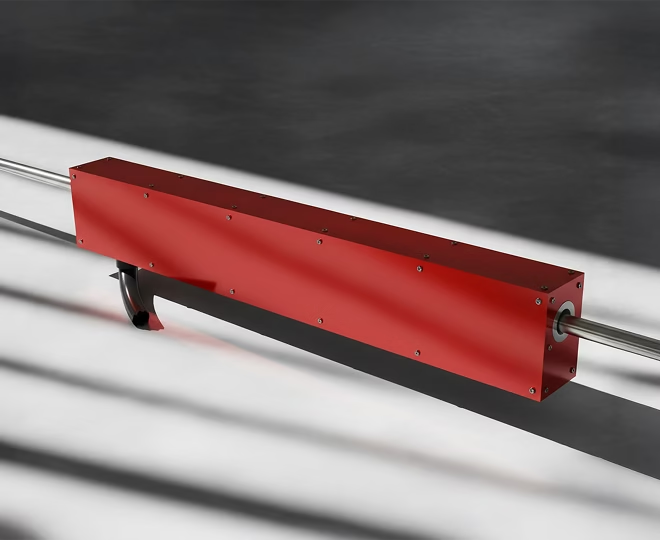
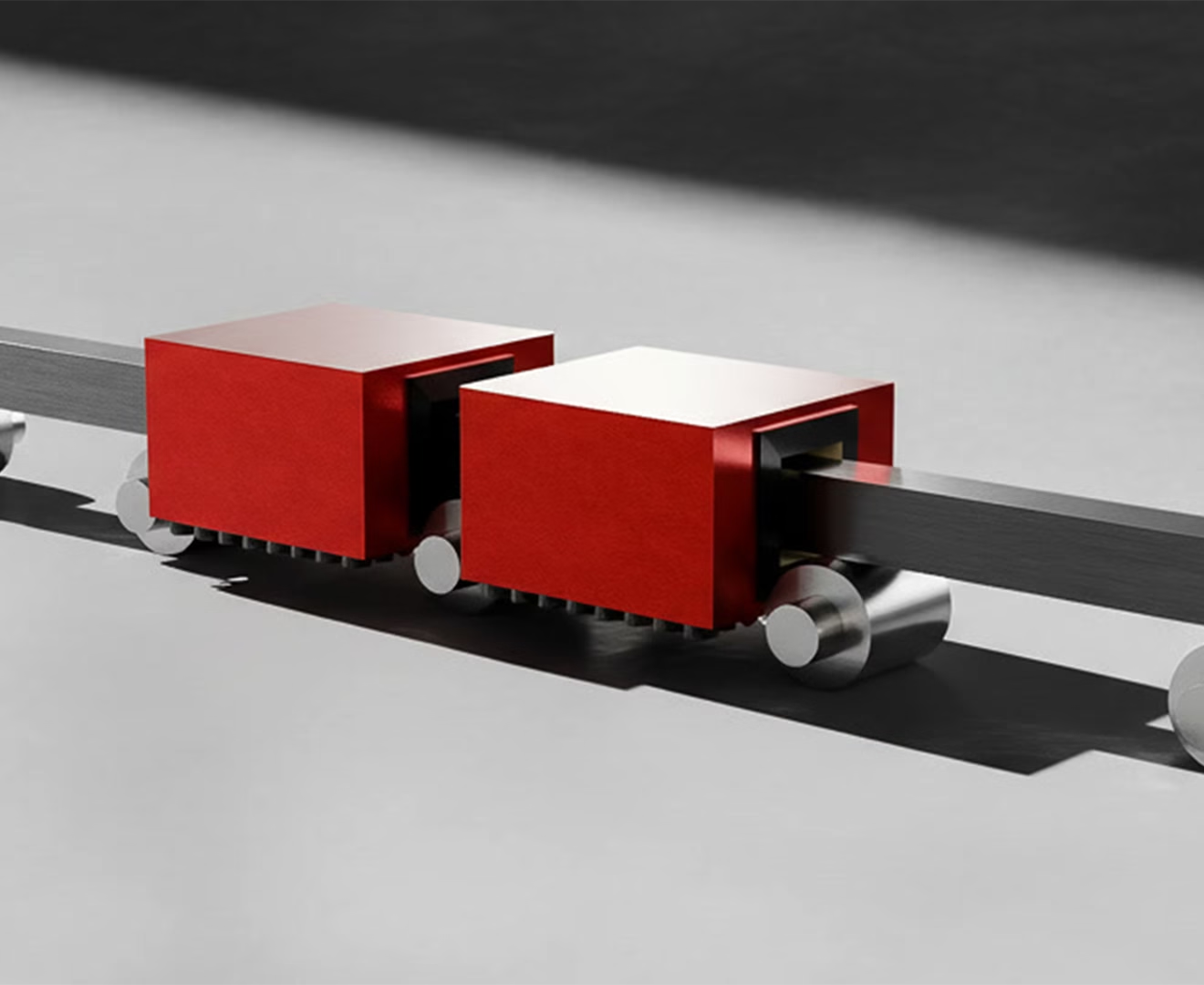
As the material passes through the heater, consistent thermal behaviour supports predictable processing, even when geometry or thickness changes.
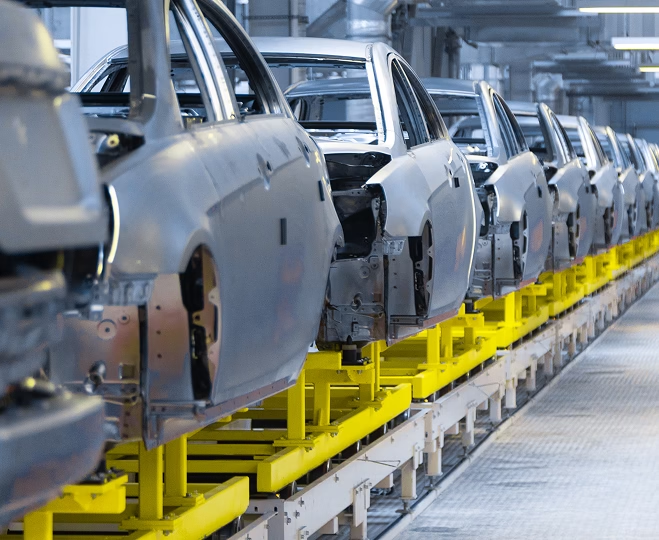
Rods, bars and tubes move through many stages before they become finished parts. In metalworking, induction helps you bring each piece to the right temperature before straightening, forming or machining, so the cut or bend behaves the same every time. Automotive lines use it to stabilise tube and bar components before bending, joining or precision finishing, keeping tact times predictable even when dimensions shift. Across these environments, controlled heating limits scrap, reduces interruptions and supports a steadier production flow.

Heating long materials requires a magnetic field that stays tightly focused as the workpiece moves. MagComp coils deliver balanced energy around rods, bars, billets and tubes, while SM2C forms a stable, low-loss magnetic circuit that keeps the field concentrated and predictable. This reduces stray fields, maintains strong power factor and supports a consistent temperature profile at varying line speeds, giving you reliable, energy-efficient heating for continuous processes.
Yes. The system is built to keep temperature consistent as bars, rods, billets or tubes pass through. We shape the coil and magnetic circuit around your profile so the material sees the same conditions from entry to exit.
Yes. Long products come with shifting geometry and mass. We adapt coil design and the magnetic circuit to your dimensions and material. That way, heating behaviour stays controlled even when you run different sizes on the same line.
Repeatable heat means repeatable behaviour. By bringing each piece to a defined thermal window, you stabilise bending, forming, joining and machining. This reduces scrap and helps you keep takt time under control, especially in high-strength materials.
The bar, rod and tube heating system has a compact footprint and works well as an inline station. We design mechanics and controls to sit inside your existing flow. For many customers, the step replaces or shortens furnace-based heating with a cleaner electric stage.
It is intended for ferromagnetic bars, rods, billets and tubes, but also other metallic materials are possible. Typical uses include pre-heating before forming or shaping, start-up boosting, continuous process heating and thermal compensation where geometry or mass changes along the length.
We design for real takt-time patterns, not idealised lab conditions. The control system adapts power as speed changes, and our magnetic design keeps the field tight around the moving material. Simulations and trials with your profiles help lock in a stable solution before full-scale deployment.